


Reamers in Horizontal Directional Drilling: Which One to Choose and Why
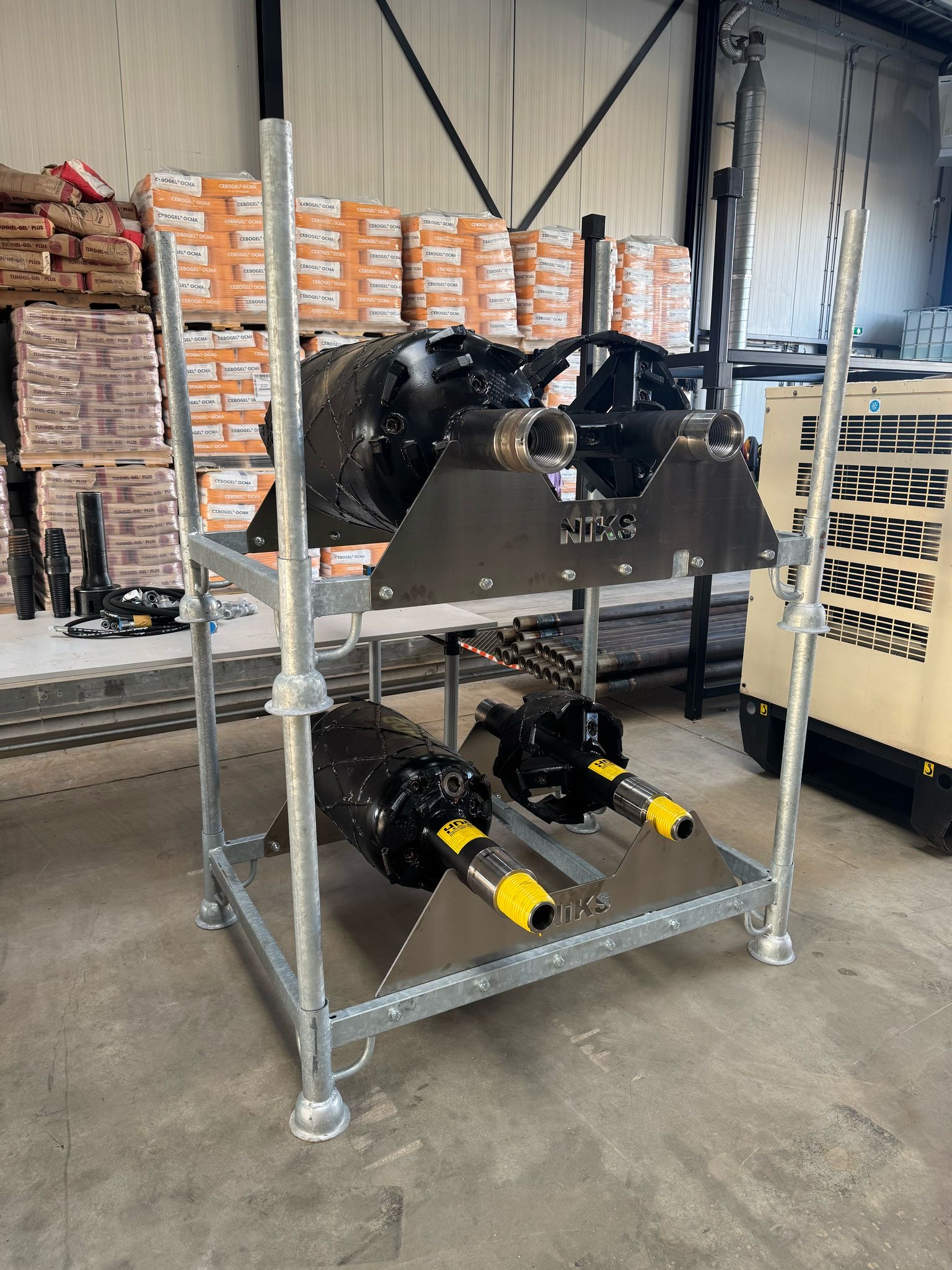
Fly Cutters
Fly cutters, also called spoked reamers, are ideal for cutting through compact soils like clay and dense loam. Their open design and extended arms reduce torque and improve stability during the first reaming pass.
The strategic placement of cutting teeth and nozzles ensures smooth material breakdown and effective mud removal. This makes fly cutters ideal for loosening the soil without putting excessive stress on the drill rig.
Common use: Fly cutters often work in tandem with barrel reamers. The fly cutter breaks up the soil, while the barrel reamer expands and supports the borehole further.
Benefits:
- Low torque
- Efficient in compact soils
- Excellent for clay, loam, and mixed sand layers
Best for:
- First reaming pass
- Long bores with multiple steps
Barrel Reamers – Stable and Reliable
Barrel reamers have a closed cylindrical body that offers excellent stability and consistent load distribution. They are especially effective under standard soil conditions.
Larger models include internal baffles and a continuous central shaft, providing neutral buoyancy. This prevents sagging or deviation—especially useful during deep or extended drills.
At HDD Drilling Tools, we provide all common barrel reamer sizes and custom designs. Every tool is modeled in 3D to match your project and equipment.
Benefits:
- High stability
- Ideal for second or third reaming passes
- Great for borehole stabilization and cleaning
Tapered Reamers – Controlled Diameter Enlargement
Tapered reamers (also called conical reamers) gradually increase in diameter. This shape distributes force evenly and reduces instability, especially in mixed ground conditions.
Benefits:
- Smooth borehole enlargement
- Less risk of collapse or tool deviation
Best for:
- Mixed soils
- Clay-sand combinations
Hole Openers – Power in Hard Soils
Hole openers are heavy-duty tools used to enlarge pilot holes into final diameters. They’re especially useful in rocky, gravelly, or cemented soils. You’ll find them in large HDD projects and underground infrastructure work.
What Is a Hole Opener?
Hole openers expand the pilot borehole in one or more stages, depending on soil and equipment. Their modular design supports many configurations, from soft sand to solid rock.
Key Features:
- Tricone bits: Rotating cones that crush and cut rock.
- Reinforced body: Made from heat-treated alloys like AISI 4145H.
- Modular setup: Switch between tricone or PDC cutters depending on the application.
Benefits:
- Withstands extreme conditions
- Cost-effective for large-diameter drilling
- Allows staged drilling
- Suitable for HDD, oil & gas, geothermal, and civil tunneling
PDC Reamers – Maximum Wear Resistance
PDC (Polycrystalline Diamond Compact) reamers are designed for tough, abrasive formations. The ultra-hard diamond cutters are fused under high pressure and temperature, offering unmatched wear resistance.
Advantages:
- Diamond cutting edges: Provide long-lasting sharpness and performance
- Low friction: No moving parts, reducing energy loss
- Durable construction: Built from high-strength steel with replaceable nozzles
Best for:
- Solid rock (e.g., basalt)
- Volcanic or cemented soils
- Dense, abrasive formations
Why Choosing the Right HDD Reamer Matters
Selecting the correct reamer depends on more than just soil. Consider:
- Final bore diameter
- Pipe type and diameter
- Drilling path length
In many cases, using multiple reamers in stages is the best strategy to reduce stress on equipment and improve borehole quality.
Conclusion
Whether you’re working in soft clay or solid rock, choosing the right HDD reamer—fly cutter, barrel reamer, tapered model, PDC, or hole opener—ensures smoother operations, longer tool life, and lower drilling costs.
Need help selecting the right reamer for your next HDD project? Contact our experts or browse our in-stock tools today.
Related Products

Need More Information?
Contact our team to discuss your drilling requirements or to learn more about our services.
Contact Us