


HDD Reamer Selection Guide: How to Choose the Right Tool for Your Ground Conditions
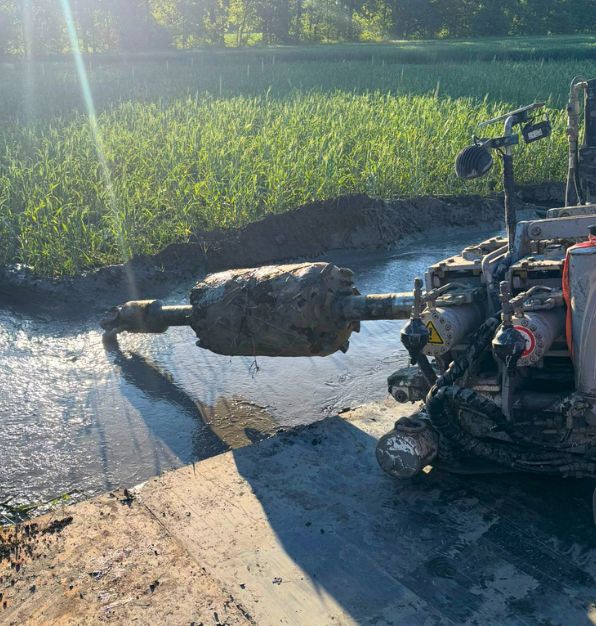
Choosing the right HDD reamer is not just a matter of matching the tool diameter to the required bore diameter. Ground conditions, cutter design, drilling-fluid capacity and several other factors all influence performance.
The best reamer is the one that enlarges the bore efficiently while keeping the hole stable and the cuttings moving. Selecting the wrong design can result in high torque, slow progress, excessive wear or poor returns. This HDD Reamer Selection Guide provides a practical starting point for selecting the right reamer type.
Starting with the ground profile
Reamer selection should begin with identifying the dominant formation, but also check for transitions. A bore may start in sand, but finish in compacted clay or gravel. Feedback from the pilot bore can provide valuable additional information about formation changes or the possible presence of cobbles. Unexpected wear or rising torque may indicate that the actual conditions differ from original ground investigation.
The tool must also work together with the drilling fluid. An open reamer may provide excellent spoil flow, while a more closed design can help stabilise and size the bore. Neither approach works independently of sufficient fluid volume and suitable fluid properties.
Choosing the right reamer for different ground conditions
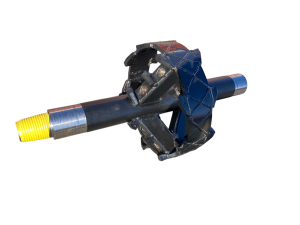
✓ A Flycutter has an open construction that cuts and loosens clay, sand and mixed layers while leaving room for drilling fluid and spoil to move around the tool.
✓ A Fluted Conical uses a tapered, spiral-fluted body to enlarge the hole gradually and move cuttings rearwards.
✓ The M Series covers a wide range, from sandy loam and dry compacted ground to broken formations. Cutter choice allows the tool to be adapted: Shark Tooth cutters prioritise speed in softer ground, while conical cutters provide more stable performance in harder formations.
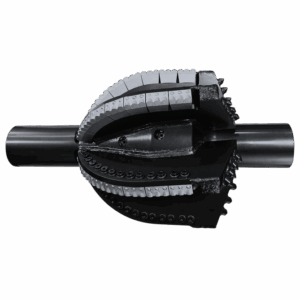
✓ A Barrel Reamer is a logical choice when bore stability and cleaning are the main priorities. Its cylindrical body distributes the load consistently and helps maintain a smooth bore profile.
✓ For tough, abrasive and relatively consistent formations, a PDC Reamer provides fast cutting with wear-resistant polycrystalline diamond cutters (PDC).
✓ A Tricone Hole Opener is generally the better option when crushing action is required. Its rotating cones crush and break the formation, making the tool well suited to demanding rock bores.
HDD Reamer selection table
| Reamer type | Recommended ground conditions | Main function |
| Barrel Reamer | Sand, sandy loam and standard soft-to-medium soils | Stabilises, sizes and cleans the bore |
| Flycutter | Clay, sand and mixed soils | Cuts and loosens soil with good spoil removal |
| Fluted Conical | Tough and mixed soils | Gradually enlarges the bore and transports cuttings |
| M Series | Sandy loam, compacted soil, broken formations and soft rock | Combines cutting performance with relatively low torque |
| PDC Reamer | Tough, abrasive and consistent formations | Cuts rapidly with highly wear-resistant fixed cutters |
| Tricone Hole Opener | Mixed, hard and abrasive formations | Crushes and cuts rock using rotating cones |
This table is a starting point rather than a substitute for project-specific engineering. Bore length, diameter, rig capacity and formation changes can all alter the final choice.
The right reamer and support for every bore
HDD Drilling Tools supplies both standard and custom reamer configurations for a wide range of ground profiles, bore diameters and connection types. Each solution can be tailored to the specific requirements of the drilling project, helping contractors select the right configuration for efficient bore enlargement and reliable performance in the field.
Related Products


Need More Information?
Contact our team to discuss your drilling requirements or to learn more about our services.
Contact Us